

FUTURE OF ELECTRIC VEHICLES

Updated: Sep 1, 2021
Automobile manufacturers across the globe have been constantly trying to find environment friendly alternatives of traditional petrol and diesel for many years and one of the alternatives which has proved by playing descently fair in the market is EVs(Electric Vehicles). Several countries in the world have proclaimed to be a zero-carbon emission nation by the next decade and switching onto EVs instead of the usual petrol/diesel vehicles can definitely help the countries to achieve the feat. Some of the countries like UK, France and Germany have even declared to ban Non- EVs by the end of this decade.
The global electric vehicle market is expected to grow from 4k thousand units in 2021 to 35k thousand units by 2030 at a growth rate of 26% each year. Under the Make in India programe the manufacturing of EVs and their related components will increase the overall GDP of India to a whopping 22%. Adoption of EVs will eventually decrease the dependence of oils, thus will help to reduce around $60 Billion on oil imports from other countries.

The increased sale of electric vehicles will in turn pull the fuel cost of every owner by Rs.20,000 for every 6000KM traversed and ultimately this will help to reduce pollution and carbon emission drastically .
Given below are some of the amazing facts of EVs which dominates the traditional cars:
EVs contain fewer mechanical parts than the conventional cars, thus reducing the maintenence cost heavily.
Low fuel price. For example, the Nexon EV only costs Rs 0.97/km to run which is significantly less than the Rs 6.12/km for the petrol Nexon.
Low GST rate – The government has reduced the rate of EVs from 12% to 5%. In addition to this, EVs are exempt from road tax and registration costs in some states like Delhi and Tamil Nadu.
WHAT ARE THE HURDLES ON THE ROAD?
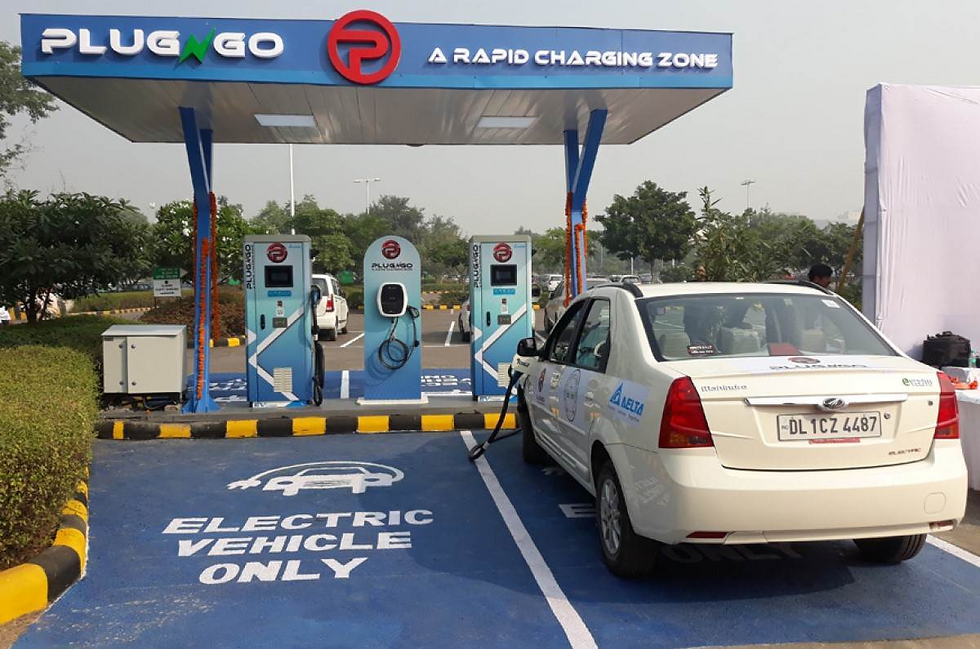
The Charging infrastructure of EVs has a big area of concern. There are oddly 1000 charging stations for electric vehicles in our country whereas the demand of vehicles on the road is through the roof. Moreover, the charging system of an electric vehicle can take few hours which can create another problem.
There is a throughout scarcity of primary battery cell manufacturing in India which puts India in the position of dependency on foreign trade. Most of the manufacturers rely on batteries imported from China, Korea and Europe. Hence, the Indian market needs more funding and help for self-relied technologies that are suited for India from both strategic and scientific forefront.

Comments